Showing posts with label Languedoc. Show all posts

Wednesday, January 6, 2016

Recipes from "A Week on the Water": Poulet Languedoc

Founder of Boutique Hotel Barges and "A Week on the Water" author, Hazel Young, is a graduate of the French National Cooking School in Beaune. She has run numerous cooking seminars and culinary cruises aboard her former barge Fandango, and planned the boutique barge's extraordinary menus for over two decades.

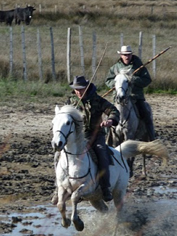
From the Camargue

Poulet Languedoc
Chicken in wine sauce Languedoc style

  • 1 free range chicken
  • 3 shallots chopped
  • 1 onion chopped
  • 300 g (2 cups) mixed fresh or frozen wild mushrooms
  • 3 tablespoons olive oil
  • 1 red and one green bell pepper, roasted, peeled and chopped
  • 1/2 teaspoon salt
  • 1/2 teaspoon pepper
  • 1/2 teaspoon cayenne pepper
  • 1 teaspoon herbes de Provence
  • 2 bay leaves
  • 10 green olives
  • 3 ripe red tomatoes, or 1 small can
  • 1 tablespoon chopped parsley
  • 1 cup white wine
  • 3 cups chicken stock
Remove chicken legs, wings and breasts and make the stock with the carcass.

Sauté chopped onion and shallots in olive oil until translucent, add chicken pieces, slowly browning them on the outside.

Add all other ingredients and slowly simmer for 45 minutes adjust seasoning.

Monday, January 4, 2016

Highlights of the Midi: Festivals in Languedoc-Roussillon

The towns and villages of France host many annual festivals, celebrating everything from patron saint days to cassoulet, and  pretty much anything in between.  All are cause to have a party and are wonderful occasions to get out and enjoy the regional food and culture of La Belle France.  The Languedoc region is no exception, with even the tiniest of villages hosting at least one fête each year.

Festival Flamenco à Nîmes Festival Flamenco à Nîmes
(January)

This festival, held at the Théâtre de Nîmes, attracts the great masters of Spanish flamenco dancing, as well as guitarists and singers.  Come to enjoy performances of this exciting and romantic Andalusian art form.  (Tickets are required)

Le Poulain de Pézenas

(Festival held for 3 Days preceding Lent)

Like several of the surrounding towns and villages, Pézenas has a "totem animal"; in this case a huge horse called Le Poulain (lo poulain or lo polin in Occitan), which means "the colt".  It makes appearances at festivals and parades throughout the year, especially for the Le Poulain de Pézenas celebration preceding Lent.  Le Poulain is said to commemorate a visit to the town in 1226 by Louis VIII, during which the king's favorite mare fell ill. She had to be left behind in Pézenas while Louis continued with the Albigensian Crusade. On his return he was astonished to find that not only was his mare now fully recovered, but she had also given birth to a fine colt, which was duly presented to him, adorned with ribbons. In return he decreed that the town should construct a wooden colt to be used to celebrate all its public festivities. The first mention of the custom is in 1615.


Medieval Festival in Sommieres
(First weekend in April)

The first weekend in April each year, this beautiful town comes alive with a street festival featuring costumed merchants, performers, music and street markets.

Grands jeux romains à Nîmes Grands jeux romains à Nîmes  (Great Roman Games of Nîmes)
(May)

Held annually in Nîmes, this festival features events that highlight the age of the Roman Empire.  Over 400 elaborately costumed re-enactors stage charriot races, gladiator fights, and mock battles.  There are activities throughout the town, including in the Arènes de Nîmes, the historic Roman amphitheater.

Festival National de Theatre Amateur in Narbonne
(Late June/Early July)

Nightly performances are held on the Cours de la Madeleine at the Archbishop's Palace.

Fête de la St-Pierre in Sète Fête de la St-Pierre in Sète
(First weekend in July)

In early July, on the feast day of St. Peter, patron saint of fisherman, the residents of Sète come together to honor those who have been lost at sea, and ask for protection for those who make their livelihood on the water.  A parade carries a statue of St. Peter through the streets, then aboard a boat which is joined by a procession of fishing trawlers festooned with flags and flowers. After the procession there is a water jousting tournament. Mix this in with the delicious local seafood, and an ample supply of rosé to wash it down, and it is impossible not to have a fabulous time.

Bastille Day Bastille Day
(July 14th)

Bastille Day is celebrated nation-wide in France, with fireworks displays, parades, music, and other events.  Carcassonne is one of the more spectacular locations to watch the fireworks lighting up the night sky over the ramparts of the historic walled cité.  Narbonne also features an excellent Bastille Day pyrotechnics display, along with a four day celebration in the Cours Mirabeau.

Festival de Radio-France in Montpellier
(held annually in July)

This international music festival features all music genres from classical to jazz. Events and live performances are held at various venues across the city.

Fiesta de SèteFiesta de Sète
(Late July/Early August)

The Festival de Sète is a two-week long Mediterranean music festival covering folk and pop music from North Africa and Europe. The festival takes place in late July to early August. There is plenty of street theatre and parties going on, as well as nightly performances in the Theatre de la Mer.

Beaucaire Medieval Fair

(4th week of July)

Beaucaire is famous for its annual Medieval fair held annually since 1217.  The fair was originally established to commemorate a famous victory against Simon de Montfort's forces. At its height this fair would attract over 300,000 people.

Festival d'Avignon
(mid-July)

The Festival d'Avignon is a 'can't miss' for lovers of theatre, dance and contemporary art, considered a major event, and a must see on the French theatrical calendar.  The Festival d'Avignon draws the attention of professionals and amateurs from all over the world, and has over the years amassed a large number of faithful observers and commentators from France and abroad.

Grand Prix de la Saint-Louis à Sète Grand Prix de la Saint-Louis à Sète
(End of August)

Every year at the end of August the Grand Prix de la Saint-Louis à Sète, the unofficial world championship of water jousting, is held in conjunction with the festival of Saint Louis. Competitors must be invited by the city to participate.  The sport of water jousting (les joutes languedociennes) is an important element of local culture. Tournaments are held from April to September on the Canal Royal in the center of town, and are the highlight of the summer festivals. The competition involves two wooden row boats, one blue and one red, manned by a team of rowers. The jousters, wielding wooden lances and shields, are positioned on a raised platform (la tintaine) at the stern of the boats. The boats are rowed toward each other, and as one would expect, the jousters attempt to dislodge each other from their platform, sending the loser for a swim in the canal.

Fête du Cassoulet de CastelnaudaryFête du Cassoulet de Castelnaudary
(Late August)

Castelnaudary has a massive week-long festival to celebrate cassoulet, the traditional dish of duck, sausage, white beans and duck fat said to have originated in Castelnaudary. Festivities include canal sports, live bands, dancing, street entertainers, and of course, cassoulet.   Main street is taken over by tents with long trestle tables where everyone enjoys this local specialty.


La Feria in Beziers
(Late August)

Some say this is the greatest Languedoc festival.  Beziers comes alive in spectacular fashion with fireworks, street entertainment, and a daily Spanish corrida. This is also an important wine festival.

Le Grau/Port Camargue
(Second Week of September)

This fête includes bull-running through the streets, Camarguaises horsemanship, and water-jousting, together with lots of street parties and all-around merry-making.


Les Primeurs d'Oc in Beziers

(October)

The premier wine festival of the Languedoc, Les Primeurs d'Oc in Beziers features wine contests and awards, together with music, dance, and theater.


Wednesday, November 11, 2015

Introducing Barge Saraphina

We're excited to welcome Saraphina
to Boutique Hotel Barges,
with this special offer for 2016!


SPECIAL OFFER FROM SARAPHINA!
10% DISCOUNT
on 4-passenger, 6-day charter cruises on Saraphina,
booked before December 31, 2015!

Contact Boutique Hotel Barges for details.

Saraphina is a Dutch barge, built in 1924, cruising the Canal du Midi between Portiragnes plage and Carcassonne. Owners Emily and Finnegan bring extensive experience in hospitality and piloting from their years on some of Europe's most exclusive luxury barges, to make your week cruising on Saraphina the perfect holiday. Both 3- and 6-night cruises.

Saraphina has 2 spacious cabins, each about 20 square meters in size, both with en-suite bathrooms. There is a comfortable deck to lounge on as you cruise, or take the traditional dutch bicycles and cycle along the towpath. Meals can be enjoyed outside, in Saraphina's covered wheelhouse, or in the spacious dining area. Watch as your meals are prepared by your hosts in the open kitchen.

Learn more about Saraphina at BoutiqueHotelBarges.com»
Or contact us to book your cruise: info@boutiquehotelbarges.com,
+703-339-5254 (US) / +33 688 811 605 (France)


Boutique Hotel Barges, LLC
Luxury Barge Cruises on the Canals of France
+703-339-5254 (US)
+33 688 811 605 (France)
info@boutiquehotelbarges.com
BoutiqueHotelBarges.com


FOLLOW US:
Follow us on Facebook
Follow our Blog

Tuesday, November 10, 2015

Highlights of the Midi: Olives

Olives growing in the Languedoc
Among the most beautiful sights in the countryside surrounding the Canal du Midi are the groves of olive trees with their silvery-green leaves and twisted trunks. The Languedoc region's dry, hot, summers and mild winters provide the ideal climate for olives, and they have been cultivated here for centuries.

Many varieties of olives are grown in the Languedoc, for both general consumption and pressing into the wonderful golden oil that is so highly valued in the kitchen. There are always one or more vendors at the local markets with mounds of locally-grown olives of every sort: green, black, oil cured, Picholines, Lucques, Négrettes, Noirettes, and more.

Cooperative Oleicole L'OuliboA Visit to the Olive Mill

If you love olives, you won't want to miss a visit to the Coopérative Oléicole L'Oulibo, near the village of Bize-Minervois. L'Oulibo is a growers' cooperative where olives from across the region are brought to be pressed into oil.

L'Oulibo offers guided tours that include a 20 minute film, The "Odyssey Olivier", a chance to see the oil press operation, and stroll through their olive grove, where display panels feature a history of the olive tree. The highlight of your visit will be L'Oulibo's shop, where you can sample all of the many varieties of olives and oil, and pick up a few bottles to take home. The shop also offers a wide range of regionally produced products — soaps, corkscrews and pepper mills made from olive wood, colorful hand-knit scarfs and socks — all perfect for gifts, or to keep yourself as a souvenir of your fabulous cruise week.

Learn more about barge cruises that include a visit to Coopérative Oléicole L'Oulibo at Boutique Hotel Barges.

Monday, September 22, 2014

Highlights of the Midi: Sète


Sete France viewed from Mont St Clair.  Photo by Christian Ferrer

Sete France - Photo by Christian Ferrer Located where the Canal du Midi meets the Mediterranean, Sète occupies part of a narrow spit of land that separates the Étang de Thau, a natural saltwater lake, from the Mediterranean sea.  This is a working port, with a large percentage of the inhabitants involved in the fishing industry.  Although Sète doesn't try to be a top tourist destination, this very fact makes it a refreshing place to visit and wonderful opportunity to surround yourself with the unspoiled local culture.

Although archeologists have found evidence that humans have occupied the area around Sète since the Bronze Age or earlier, the town was not founded until the mid-17th Century.  King Louis XIV issued the order to build a port and provide an outlet to the sea for the Canal du Midi, and the town grew around this project. Originally known as Cette (or Seta in Occitan), the spelling was changed to Sète in 1928.

Sète is built on and around an extinct volcano, Mont St Clair, at the end point of the Canal du Rhône à Sète, and the eastern end of the Canal du Midi.  A network of smaller canals crisis-cross the town, linking the Étang de Thau and the sea, the reason some call Sète 'Venice of the Languedoc'.

Sete France viewed from the sea

The sport of water jousting (les joutes languedociennes) is an important element of local culture. Tournaments are held from April to September on the Canal Royal in the center of town, and are the highlight of the summer festivals. The competition involves two wooden row boats, one blue and one red, manned by a team of rowers. The jousters, wielding wooden lances and shields, are positioned on a raised platform (la tintaine) at the stern of the boats. The boats are rowed toward each other, and as one would expect, the jousters attempt to dislodge each other from their platform, sending the loser for a swim in the canal. All the while a band plays from onshore and crowds cheer the jousters on.  Every year at the end of August the Grand Prix de la Saint-Louis à Sète, the unofficial world championship of water jousting, is held in conjunction with the festival of Saint Louis. Competitors must be invited by the city to participate. Sétois jousting king Aurelien Evangelisti, 'The Centurion', has won the title seven times, but was defeated in 2014 by Benjamin Arnau. A water jousting school (École de joutes de la Marine) and a museum dedicated to the sport are located in Sète.


Sète hosts several colorful festivals each year.  In late June or early July, on the feast day of St. Peter, patron saint of fisherman, the town residents come together to honor those who have been lost at sea, and ask for protection for those who make their livelihood on the water.  A parade carries a statue of St. Peter through the streets, then aboard a boat which is joined by a procession of fishing trawlers festooned with flags and flowers. After the procession there is a water jousting tournament. Mix this in with the delicious local seafood, and an ample supply of rosé to wash it down, and it is impossible not to have a fabulous time.  A festival held annually on August 25 celebrates the patron of Sète, Saint Louis, with more water jousting, feasting, music, and fireworks.

With over 90 varieties of fish harvested from the Mediterranean, and cultivated mussels and oysters from the Étang de Thau, it is no wonder that Sète has many excellent restaurants serving up the fruits of the sea.There are several local and regional specialties featured, including la tielle, a dish brought from the Gulf of Gaèta in Italy by the many immigrants that arrived in Sète from this area in the 18th and 19th centuries. It is a seafood mixture - usually either octopus or squid - combined with tomato sauce and spices, then encased in a pastry crust and baked.  Other specialties include stuffed squid a la Sétoise served in a wine, tomato and garlic sauce, and a local variation of bourride which, unlike other regional recipes for this dish, is not finished with garlic-laden aioli.

Sete Restaurants

Another wonderful attraction here are the 12 kilometers of sea shore with beautiful sandy beaches.  Free car parks and turn-offs from National Route 112 provide convenient access to the beach, perfect for a day of sunbathing and picnicking by the seaside.

Sete beaches.  Photo by Guenterfranz

Learn more about barge cruises on Canal du Midi that include a visit to Sète at Boutique Hotel Barges.

Monday, September 1, 2014

Understanding Terroir

a vineyard in FranceContributed by Dawn Shepherd from Boutique Hotel Barges' US Office 

Terroir is a French word which translates literally as 'soil', but the meaning of this word encompasses much more. To wine lovers and vintners, terroir expresses the combination of environmental elements, including soil type, weather, topography, and nearby crops or native plants, that impact the overall character of wine made from grapes grown in a particular area.

Terroir is at the base of the French wine Appellation d'Origine Contrôlée (AOC) system, the strict set of rules governing how French wines can be labeled. Unlike American wine labels that generally feature the variety of grape a wine is made from, French wines are primarily labeled based on the region where the wine was produced.

Chateau Tour BoiséeAlthough I knew the definition of terroir as it applies to wine, I first truly understood it after spending a few weeks in the Languedoc aboard the beautiful barge Tango. It was grape harvesting time in September, with warm sunny days and refreshingly cool nights. We cruised along the Canal du Midi, past vineyards and olive groves, and fields where sunflowers had grown. It was a very pleasant and memorable experience. About 6 months after returning to the U.S., I opened a bottle of wine that I had brought back with me. It was from the domaine of Marie-Claude and Jean-Louis Poudou in Minervois, Chateau Tour Boisée. One sip and I was instantly transported back to Southwestern France. It is hard to describe the magic created by the blend of aroma and taste, but the wine held the very essence of the Languedoc - its terroir.

The concept of terroir applies to other crops, particularly tea, coffee and cacao, and increasing the term is being used as it relates to the production of artisan cheese.

When applied to cooking, the term cuisine de terroir means 'regional cooking.' It implies that the chef is using fresh, locally sourced ingredients, prepared using traditional methods and recipes unique to the region. This is the true cooking of the French people, that you can find, not only in the local bistro, but also being served at home for Sunday dinner.  It is France's 'soul food.'

Experience terroir for yourself aboard one of the wonderful barges at BoutiqueHotelBarges.com.

Saturday, August 9, 2014

Recipes from "A Week on the Water": Bourride

Founder of Boutique Hotel Barges and "A Week on the Water" author, Hazel Young, is a graduate of the French National Cooking School in Beaune. She has run numerous cooking seminars and culinary cruises aboard her former barge Fandango, and planned the boutique barge's extraordinary menus for over two decades.

Bourride is a stew of vegetables, fish and fruites de mer that has its origins in the Landguedoc and Provence regions of Southern France. The name is derived from the Occitan bourrido, meaning 'something boiled'. Less well known than bouillabaisse, but equally delicious, the major difference between the two dishes comes from the garlic-rich aioli added to the bourride at the end of cooking, giving it a creaminess and wonderful aroma.

Bourride

Monk fish and mussels in a spicy aioli stew.
  • 1kg (2.2 lbs) monkfish, filleted and cut into small pieces
  • 1kg (2.2 lbs) mussels, cleaned
  • 2 leeks washed and finely sliced
  • 2 carrots peeled and finely sliced
  • 2 medium potatoes, peeled and diced
  • 1 zucchini, diced
  • 1 tablespoon fresh parsley
  • salt and pepper
  • 1 tablespoon paella spice
  • 1/2 teaspoon crushed red hot peppers or cayenne
  • 3 bay leaves
  • 1 cup white wine
  • 1 L (7 cups) water
  • liquid from mussels after steaming
  • 1 cup homemade tomato sauce
  • 1 tablespoon vegetable stock paste
  • 2 cups homemade mayonnaise aioli*
Heat olive oil and gently fry leeks until translucent. Add carrots and potatoes, and stir over a low flame until coated in oil.Meanwhile steam mussels for 5 minutes in separate saucepan with a lid on, no extra water needed, to obtain liquid.

Drain mussels and add stock to vegetables along with white wine, water, tomato sauce, stock paste and seasonings. Let simmer for 20 minutes then add zucchini and simmer another ten minutes.

Remove half of the mussels from their shells then set all mussels aside to add at the last minute. When ready to serve, add monkfish and simmer for only two or three minutes, adding mussels.

Remove from heat, stir in 1 cup of aioli.

Put into individual bowls, decorate with two or three mussels in their shells on the top. Serve extra aioli in small individual sauce dishes.

Aïoli mayonnaise*

  • 1 egg yolk
  • 1 tablespoon Dijon mustard
  • 1/2 cup vegetable oil
  • 1/2 cup olive oil
  • 1/2 teaspoon salt
  • 1/2 teaspoon white ground pepper
  • 1 tablespoon freshly squeezed lemon juice
  • 1 tablespoon cider vinegar
All ingredients should be at room temperature to ensure success.

In a deep bowl, whisk mustard with egg yolk, then drizzle in the vegetable oil whisking vigorously, hold back the oil and beat more if it isn’t thickening fast enough. If ever it separates, put a tablespoon of boiling hot water into a new bowl and whisk the mixture once again until it thickens. Resume adding the rest of the oil, beat in vinegar, lemon juice, salt and pepper.

To make aioli, add two cloves of peeled and crushed garlic.

Do You Speak French Wine?


You'll want to brush up on your French wine label reading skills before your barge cruise.  Here are some key terms.
  • Appellation contrôlée - Designated growing area
  • Appellation d'Origine Protegée - AOP, highest grade of French wine
  • Blanc - white
  • Château or Domaine - wine estate
  • Clos - "an enclosure," usually an enclosed vineyard
  • Crémant - sparkling wine produced outside the Champagne region
  • Cru - a vineyard or group of vineyards, of recognized quality
  • Cuvée - usually denotes a special blend or selected vats of higher quality, but an unregulated term
  • Grand cru - Regionally graded wine, not technically a classification of wine quality, it indicates the potential of the vineyard or terroir
  • Indication Géographique Protégée - IGP, Regional French wines, middle-grade French wines
  • Millésime or Récolte - vintage or harvest date
  • Mis en bouteille au domaine - bottled at the estate
  • Réserve - implies a higher quality, but an unregulated term
  • Rouge - red
  • Vielles Vignes - old vines
  • Vin de France - French table wines, lower grade of French wine

Resources:

Visit Rocket Languages for a list of French words about wine with audio, so you can hear the correct French pronunciation for each.

An incredible listing with ratings for wines of Burgundy and Languedoc Roussillon is available on winemag.com

Learn more about French barge cruises that feature visits to vineyards, winetasting, and special wine-harvest cruises at Boutique Hotel Barges.