Showing posts with label Canals of France. Show all posts

Wednesday, January 6, 2016

Recipes from "A Week on the Water": Poulet Languedoc

Founder of Boutique Hotel Barges and "A Week on the Water" author, Hazel Young, is a graduate of the French National Cooking School in Beaune. She has run numerous cooking seminars and culinary cruises aboard her former barge Fandango, and planned the boutique barge's extraordinary menus for over two decades.

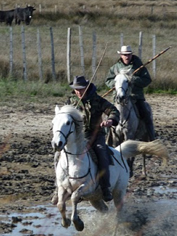
From the Camargue

Poulet Languedoc
Chicken in wine sauce Languedoc style

  • 1 free range chicken
  • 3 shallots chopped
  • 1 onion chopped
  • 300 g (2 cups) mixed fresh or frozen wild mushrooms
  • 3 tablespoons olive oil
  • 1 red and one green bell pepper, roasted, peeled and chopped
  • 1/2 teaspoon salt
  • 1/2 teaspoon pepper
  • 1/2 teaspoon cayenne pepper
  • 1 teaspoon herbes de Provence
  • 2 bay leaves
  • 10 green olives
  • 3 ripe red tomatoes, or 1 small can
  • 1 tablespoon chopped parsley
  • 1 cup white wine
  • 3 cups chicken stock
Remove chicken legs, wings and breasts and make the stock with the carcass.

Sauté chopped onion and shallots in olive oil until translucent, add chicken pieces, slowly browning them on the outside.

Add all other ingredients and slowly simmer for 45 minutes adjust seasoning.

Monday, January 4, 2016

Highlights of the Midi: Festivals in Languedoc-Roussillon

The towns and villages of France host many annual festivals, celebrating everything from patron saint days to cassoulet, and  pretty much anything in between.  All are cause to have a party and are wonderful occasions to get out and enjoy the regional food and culture of La Belle France.  The Languedoc region is no exception, with even the tiniest of villages hosting at least one fête each year.

Festival Flamenco à Nîmes Festival Flamenco à Nîmes
(January)

This festival, held at the Théâtre de Nîmes, attracts the great masters of Spanish flamenco dancing, as well as guitarists and singers.  Come to enjoy performances of this exciting and romantic Andalusian art form.  (Tickets are required)

Le Poulain de Pézenas

(Festival held for 3 Days preceding Lent)

Like several of the surrounding towns and villages, Pézenas has a "totem animal"; in this case a huge horse called Le Poulain (lo poulain or lo polin in Occitan), which means "the colt".  It makes appearances at festivals and parades throughout the year, especially for the Le Poulain de Pézenas celebration preceding Lent.  Le Poulain is said to commemorate a visit to the town in 1226 by Louis VIII, during which the king's favorite mare fell ill. She had to be left behind in Pézenas while Louis continued with the Albigensian Crusade. On his return he was astonished to find that not only was his mare now fully recovered, but she had also given birth to a fine colt, which was duly presented to him, adorned with ribbons. In return he decreed that the town should construct a wooden colt to be used to celebrate all its public festivities. The first mention of the custom is in 1615.


Medieval Festival in Sommieres
(First weekend in April)

The first weekend in April each year, this beautiful town comes alive with a street festival featuring costumed merchants, performers, music and street markets.

Grands jeux romains à Nîmes Grands jeux romains à Nîmes  (Great Roman Games of Nîmes)
(May)

Held annually in Nîmes, this festival features events that highlight the age of the Roman Empire.  Over 400 elaborately costumed re-enactors stage charriot races, gladiator fights, and mock battles.  There are activities throughout the town, including in the Arènes de Nîmes, the historic Roman amphitheater.

Festival National de Theatre Amateur in Narbonne
(Late June/Early July)

Nightly performances are held on the Cours de la Madeleine at the Archbishop's Palace.

Fête de la St-Pierre in Sète Fête de la St-Pierre in Sète
(First weekend in July)

In early July, on the feast day of St. Peter, patron saint of fisherman, the residents of Sète come together to honor those who have been lost at sea, and ask for protection for those who make their livelihood on the water.  A parade carries a statue of St. Peter through the streets, then aboard a boat which is joined by a procession of fishing trawlers festooned with flags and flowers. After the procession there is a water jousting tournament. Mix this in with the delicious local seafood, and an ample supply of rosé to wash it down, and it is impossible not to have a fabulous time.

Bastille Day Bastille Day
(July 14th)

Bastille Day is celebrated nation-wide in France, with fireworks displays, parades, music, and other events.  Carcassonne is one of the more spectacular locations to watch the fireworks lighting up the night sky over the ramparts of the historic walled cité.  Narbonne also features an excellent Bastille Day pyrotechnics display, along with a four day celebration in the Cours Mirabeau.

Festival de Radio-France in Montpellier
(held annually in July)

This international music festival features all music genres from classical to jazz. Events and live performances are held at various venues across the city.

Fiesta de SèteFiesta de Sète
(Late July/Early August)

The Festival de Sète is a two-week long Mediterranean music festival covering folk and pop music from North Africa and Europe. The festival takes place in late July to early August. There is plenty of street theatre and parties going on, as well as nightly performances in the Theatre de la Mer.

Beaucaire Medieval Fair

(4th week of July)

Beaucaire is famous for its annual Medieval fair held annually since 1217.  The fair was originally established to commemorate a famous victory against Simon de Montfort's forces. At its height this fair would attract over 300,000 people.

Festival d'Avignon
(mid-July)

The Festival d'Avignon is a 'can't miss' for lovers of theatre, dance and contemporary art, considered a major event, and a must see on the French theatrical calendar.  The Festival d'Avignon draws the attention of professionals and amateurs from all over the world, and has over the years amassed a large number of faithful observers and commentators from France and abroad.

Grand Prix de la Saint-Louis à Sète Grand Prix de la Saint-Louis à Sète
(End of August)

Every year at the end of August the Grand Prix de la Saint-Louis à Sète, the unofficial world championship of water jousting, is held in conjunction with the festival of Saint Louis. Competitors must be invited by the city to participate.  The sport of water jousting (les joutes languedociennes) is an important element of local culture. Tournaments are held from April to September on the Canal Royal in the center of town, and are the highlight of the summer festivals. The competition involves two wooden row boats, one blue and one red, manned by a team of rowers. The jousters, wielding wooden lances and shields, are positioned on a raised platform (la tintaine) at the stern of the boats. The boats are rowed toward each other, and as one would expect, the jousters attempt to dislodge each other from their platform, sending the loser for a swim in the canal.

Fête du Cassoulet de CastelnaudaryFête du Cassoulet de Castelnaudary
(Late August)

Castelnaudary has a massive week-long festival to celebrate cassoulet, the traditional dish of duck, sausage, white beans and duck fat said to have originated in Castelnaudary. Festivities include canal sports, live bands, dancing, street entertainers, and of course, cassoulet.   Main street is taken over by tents with long trestle tables where everyone enjoys this local specialty.


La Feria in Beziers
(Late August)

Some say this is the greatest Languedoc festival.  Beziers comes alive in spectacular fashion with fireworks, street entertainment, and a daily Spanish corrida. This is also an important wine festival.

Le Grau/Port Camargue
(Second Week of September)

This fête includes bull-running through the streets, Camarguaises horsemanship, and water-jousting, together with lots of street parties and all-around merry-making.


Les Primeurs d'Oc in Beziers

(October)

The premier wine festival of the Languedoc, Les Primeurs d'Oc in Beziers features wine contests and awards, together with music, dance, and theater.


Wednesday, November 18, 2015

It's Beaujolais Nouveau Time!

The Beaujolais province of France"Le Beaujolais Nouveau est arrivé !" This is a phrase you're likely to hear every year on the third Thursday in November, at 12:01 a.m. local time around the globe, as the newest vintage of wine from France's Beaujolais region is released to the public.  This wine, fermented for just a few weeks, is known as Beaujolais Nouveau.  It is a red wine made from Gamay grapes that are grown and harvested by hand in the Beaujolais province, at the southern tip of Burgundy.
 
Though perhaps not as complex as red wines from this region that are aged for one or more years, Beaujolais Nouveau is a bright, fruity, and very drinkable wine. It is recommended to be served slightly chilled, and is intended for immediate consumption. It is not a variety to stock away in the wine cellar, as it does not improve with age.

Beaujolais Nouveau is produced using carbonic maceration.  This whole-grape anaerobic fermentation process brings out fruit flavors, without imparting bitter tannins from the grape skins.   Whole bunches of grapes, stems and all, are placed in huge vats, along with some yeast. The vats are sealed and carbon dioxide is introduced.  The weight of the grapes themselves crushes those at the bottom of the vat, which begin to ferment.  More carbon dioxide is released by the fermenting fruit, and in this environment, starved of oxygen (the 'anaerobic' part), fermentation begins even in the uncrushed grapes.  Eventually the fermentation process causes the whole grapes to burst, releasing their juice.  In a short six to eight weeks, the wine is ready to be bottled, shipped, and consumed.

Considered by some wine connoisseurs to be too simple, many find the simplicity and freshness of this wine to be its greatest charm.  And, a plus for those minding their budget, Beaujolais Nouveau is very affordable.

In the US, with Thanksgiving falling just a week after 'Beaujolais Nouveau Day,' it's the perfect opportunity to stock up on a few bottles to enjoy with friends and family over the holiday weekend.  Outside the US, well, you really don’t need a special occasion to enjoy this wonderfully refreshing, young wine.

Visit BoutiqueHotelBarges.com for information on cruising in the Burgundy region.

Gamay Grapes

Autumn Vineyard in Burgundy


Rory and Caroline MacraeEach year, on the third weekend of November, Beaune plays host to the world's most famous charity wine auction. Professionals, connoisseurs and wine lovers come together for two days of festivities, the epitome of pure Burgundy tradition.

The auction takes place in L'Hôtel-Dieu, an extraordinary collection of 15th century hospital buildings. Since 1471, vast tracts of land have been donated and bequeathed to the Hospices de Beaune and its vineyards extend throughout the côtes de Nuits and the côtes de Beaune. Since 1859, the Hospices' prestigious vintages have been sold by candlelight on the third Sunday of November. For several centuries now, the entire proceeds of this exceptional charity auction have been dedicated to the charitable and religious works of the old hospices as well as new civil and secular hospital institutions.

Below are scenes from the 2015 Gala Dinner held at L'Hôtel-Dieu compliments of Rory and Caroline Macrae (pictured on right), owners of Barge Après Tout, who attended this fabulous event.
L'Hôtel-Dieu, Annual Wine Auction 2015

L'Hôtel-Dieu, Annual Wine Auction 2015

L'Hôtel-Dieu, Annual Wine Auction 2015

Wednesday, November 11, 2015

Introducing Barge Saraphina

We're excited to welcome Saraphina
to Boutique Hotel Barges,
with this special offer for 2016!


SPECIAL OFFER FROM SARAPHINA!
10% DISCOUNT
on 4-passenger, 6-day charter cruises on Saraphina,
booked before December 31, 2015!

Contact Boutique Hotel Barges for details.

Saraphina is a Dutch barge, built in 1924, cruising the Canal du Midi between Portiragnes plage and Carcassonne. Owners Emily and Finnegan bring extensive experience in hospitality and piloting from their years on some of Europe's most exclusive luxury barges, to make your week cruising on Saraphina the perfect holiday. Both 3- and 6-night cruises.

Saraphina has 2 spacious cabins, each about 20 square meters in size, both with en-suite bathrooms. There is a comfortable deck to lounge on as you cruise, or take the traditional dutch bicycles and cycle along the towpath. Meals can be enjoyed outside, in Saraphina's covered wheelhouse, or in the spacious dining area. Watch as your meals are prepared by your hosts in the open kitchen.

Learn more about Saraphina at BoutiqueHotelBarges.com»
Or contact us to book your cruise: info@boutiquehotelbarges.com,
+703-339-5254 (US) / +33 688 811 605 (France)


Boutique Hotel Barges, LLC
Luxury Barge Cruises on the Canals of France
+703-339-5254 (US)
+33 688 811 605 (France)
info@boutiquehotelbarges.com
BoutiqueHotelBarges.com


FOLLOW US:
Follow us on Facebook
Follow our Blog

Tuesday, November 10, 2015

Highlights of the Midi: Olives

Olives growing in the Languedoc
Among the most beautiful sights in the countryside surrounding the Canal du Midi are the groves of olive trees with their silvery-green leaves and twisted trunks. The Languedoc region's dry, hot, summers and mild winters provide the ideal climate for olives, and they have been cultivated here for centuries.

Many varieties of olives are grown in the Languedoc, for both general consumption and pressing into the wonderful golden oil that is so highly valued in the kitchen. There are always one or more vendors at the local markets with mounds of locally-grown olives of every sort: green, black, oil cured, Picholines, Lucques, Négrettes, Noirettes, and more.

Cooperative Oleicole L'OuliboA Visit to the Olive Mill

If you love olives, you won't want to miss a visit to the Coopérative Oléicole L'Oulibo, near the village of Bize-Minervois. L'Oulibo is a growers' cooperative where olives from across the region are brought to be pressed into oil.

L'Oulibo offers guided tours that include a 20 minute film, The "Odyssey Olivier", a chance to see the oil press operation, and stroll through their olive grove, where display panels feature a history of the olive tree. The highlight of your visit will be L'Oulibo's shop, where you can sample all of the many varieties of olives and oil, and pick up a few bottles to take home. The shop also offers a wide range of regionally produced products — soaps, corkscrews and pepper mills made from olive wood, colorful hand-knit scarfs and socks — all perfect for gifts, or to keep yourself as a souvenir of your fabulous cruise week.

Learn more about barge cruises that include a visit to Coopérative Oléicole L'Oulibo at Boutique Hotel Barges.

Sunday, October 25, 2015

Recipes from "A Week on the Water": Tarte Tatin

Founder of Boutique Hotel Barges and "A Week on the Water" author, Hazel Young, is a graduate of the French National Cooking School in Beaune. She has run numerous cooking seminars and culinary cruises aboard her former barge Fandango, and planned the boutique barge's extraordinary menus for over two decades.

With Fall in the air, and the farmers market full of delicious apples, what better time to make this upside-down caramelized apple tart?


Tarte Tatin

Quick puff pastry:
  • 2 cups white flour
  • pinch of salt
  • 1 cup very cold butter grated with a large cheese grater
Work in butter slivers, add water little by little and form a ball. Roll out and fold over by thirds a few times, as for puff pastry. Roll out and put in pie tin to refrigerate while preparing the apples.

Filling:
  • 2 tablespoons butter
  • 1 cup sugar
  • 8 firm apples, peeled, cored and cut in half
  • 3 tablespoons Calvados apple brandy
  • 3 tablespoons apple juice
Place sugar, brandy and apple juice in large heavy skillet over low heat, stir to dissolve sugar, add butter and allow to melt and bubble. Lower heat.
Add apples, dome side down, the liquid has to reduce to a caramel eventually. This is a lovingly tended 45 minutes procedure, the apples have to remain firm but cooked through each one coated in caramel.
Place your pastry on top.
Bake at (400ºF/200ºC/Gas 6) until pastry is golden, and caramel is sizzling underneath.

Friday, October 23, 2015

Highlights of Burgundy: Beaune

L'Hôtel-Dieu
The city of Beaune, considered the "Capital of Burgundy Wines," sits at the heart of the Côte d'Or department in Eastern France, on the Route des Grands Crus.  It is surrounded by villages and small towns where vintners cultivate grapes that produce the world-renowned wines of Burgundy.
 
L'Hôtel-Dieu Although there are no Grand Cru vineyards in Beaune, many of the vats and cellars where wines are fermented and aged are located within the city.  It is a hub for the wine industry, with suppliers of tractors and other wine-making equipment located here, as well as a number of wine-related institutes and associations.  It is also headquarters for many négociants, the wine merchants who purchase the products of smaller growers and winemakers, to be bottled and sold under a larger domaine's label.

Moat in Beaune Beaune is an ancient city, whose settlement pre-dates Roman times.  Its history continues through the Middle Ages and Renaissance, and survives today, with about half of the battlements, ramparts, and moat of the Medieval walled city remaining intact.
 
A major attraction for visitors to Beaune is L'Hôtel-Dieu, a hospital and refuge for the poor, which received its first patient on January 1, 1452, and has welcomed the elderly, disabled, and sick for treatment from the Middle Ages through the present.  Its beautiful patterned tile roof, a style unique to the Burgundy region, offers a wonderful opportunity for photography, as does the interior, with breathtaking stained glass and ornate woodwork.

Cafe in the center of BeauneThe older section of the city features a cluster of shops and cafés around the central square. Shop here for wine (of course!), as well as other gourmet French treats, and fashionable clothing. An afternoon stroll to window-shop, stopping at an outdoor cafe for a pick-me-up, provides great entertainment in itself.

Beaune's Saturday market is a major event. Vendors spill out from the Les Halles covered market into the pedestrian area outside L'Hôtel-Dieu. Inside, the market stalls are heaped with the freshest seasonal produce, cheeses, fish, and baked goods — a true feast for the senses.

Learn more about barge cruises that include a visit to Beaune at Boutique Hotel Barges.

Thursday, October 22, 2015

Highlights of the Midi: Carcassonne

Historic Fortified City of Carcassonne

A cruise on Canal du Midi wouldn't be complete without a visit to Carcassonne. You will step back in time as you explore the restored medieval fortified town.

Historic Cité de Carcassonne is a UNESCO World Heritage site.  The city rests on a hill overlooking the Aude Valley, and has served as a fortified settlement since prehistoric times.  Carcassonne occupies a strategic location, along the ancient routes linking the Atlantic and Mediterranean. It was been held by or ruled over by many different groups throughout history.   The earliest occupation of the site dates to the 6th century BC. Romans fortified the hilltop around 100 BC and occupied the area until the fall of the Roman Empire in western Europe. The fortification was taken over in the fifth century by the Visigoths, who founded the city. Carcassonne gained notoriety in the 13th century as a stronghold of Occitan Cathars, before they were defeated by Simon de Montfort.

In the mid-1800s Carcassonne underwent extensive restoration, a controversial project undertaken by architect Eugène Viollet-le-Duc. Viollet-le-Duc began the restoration work by ordering structures destroyed, that over the centuries, had encroached on the ruins of the ancient fortifications.  Many of these structures were themselves quite old, and often were constructed using rubble from the battlements.  The restoration is criticized by some for being less than completely authentic, but there is no doubt that Viollet-Le-Duc's work was genius.

Today Carcassonne provides a wonderful experience for visitors who walk the narrow, car-free streets and tour the restored battlements at the heart of the old city.  Carcassonne is home to several one- and two-Michelin-starred restaurants, an abundance of cafés, as well as enough boutiques and shops to fill the afternoon with exciting retail opportunities.  For a unique before- or after-cruise stay, try one of the hotels located within the walls of the old city.

Barges cruising Canal du Midi include Athos du Midi, Colibri, Emma, Enchanté, Roi Soleil, and Tango. Learn more about barge cruises that include a visit to Carcassonne at Boutique Hotel Barges.

Friday, March 20, 2015

Featured Barge: Athos du Midi

Barge Athos du Midi offers private charter cruises for 8 to 10 guests, as well as individual cabin bookings, cruising the Canal du Midi.


The Athos is designed for outdoor enjoyment of the Canal du Midi with a spacious deck and top quality bicycles. Having five cabins makes the Athos the perfect barge for family or friends reunions or the possibility of workshops for painting or writing for instance . Every land visit from Carcassonne to the Mediterranean port of Marseillian is exceptionally well organized and informative.

Danielle and Julian Farrant run a tight ship. Captain Julian entertains guests as a raconteur telling 20 years of anecdotes gleaned while cruising the canal, complete with all the accents. Guests love it. Danielle oversees every aspect of the day to day operations from staff to kitchen to staterooms to maintain their high standard of service.

Athos' chef knows that sublime food and wine is a principle reason to come to France. Each meal aboard the Athos is special, inspired both by the tradition of rich, French cuisine and fresh Mediterranean ingredients. Chef takes passengers on a journey through the very best of the Southern French culinary tradition.

What Makes Athos Special

  • Best choice for family gatherings or groups of friends wanting to travel together.
  • Excellent for individual cabin bookings as more guests offer more social choices where a party atmosphere quickly evolves.
  • Every evening the two hostesses set a very elegant, candlelit table enhancing the delicious gourmet French cuisine and wines.
Learn more about cruising on Barge Athos du Midi, or book your trip at Boutique Hotel Barges.

Tuesday, December 16, 2014

Recipes from "A Week on the Water": Sticky Toffee Pudding

Founder of Boutique Hotel Barges and "A Week on the Water" author, Hazel Young, is a graduate of the French National Cooking School in Beaune. She has run numerous cooking seminars and culinary cruises aboard her former barge Fandango, and planned the boutique barge's extraordinary menus for over two decades.
STEP ONE Cake Batter
  • 175 g (6 oz) dates, chopped in mixer
  • 2 cups of water
  • pinch of salt
  • 1 teaspoon baking soda
  • 175g (1/2 cup) white flour
  • 1 tablespoon baking powder
  • 50 g (2 oz) butter
  • 150 g (6 oz) sugar
  • 2 eggs
  • 1 teaspoon vanilla extract
Put water into a saucepan with salt, add dates and bring to a boil, simmer 2 minutes.
Remove from heat and set aside to cool.
Add baking soda.
Mix butter, sugar, eggs, flour and vanilla into a smooth paste.
Blend into cooled date mixture.
Bake in oven (375ºF190ºC/Gas 5) oven until brown and risen, approximately 35 minutes

STEP TWO Butterscotch Sauce
  • 125 g (5 oz) butter
  • 2 cups sugar
  • 250 ml (1 1/2 cup) cream
  • 2 tablespoons icing sugar
  • 6 mint leaves for decoration
Put butter and sugar in saucepan, stir constantly so it doesn’t burn, caramelize until a nice light brown color
Add cream carefully so it doesn’t splutter, bring back to boil and simmer for 2 minutes. Turn off heat, set aside.
To serve, ladle the sauce onto dessert plates, cut squares or circles out of the cake and place onto the warm sauce. Sprinkle with a little icing sugar and place a mint leaf on each.
Serve warm.

Thursday, December 11, 2014

Travel Tips: Global Entry Program for US Travellers

At the end of a long flight back to the US from a foreign country, the last thing anyone feels like doing is standing in a slowly snaking line to go through Customs. You can avoid this by using the lighting-fast, automated kiosk to check in, and be on your way to baggage claim with little or no waiting in line.

A bit of pre-travel planning is required to be eligible for kiosk check-in. You must register for the Global Entry program, undergo a background check, and pay the $100 fee.  Once registered, your Global Entry membership is valid for five years.

More information on the program and full instructions on how to apply can be found at http://www.cbp.gov/global-entry/about

Here is a brief overview of program information:

Benefits for Global Entry Members
  • No processing lines
  • No paperwork
  • Access to expedited entry benefits in other countries
  • Available at major U.S. airports
  • Reduced wait times
Eligibility for Global Entry

Global Entry is open to U.S. citizens, lawful permanent residents, Dutch citizens, South Korean citizens, Panamanian citizens and Mexican nationals. Canadian citizens and residents may enjoy Global Entry benefits through membership in the NEXUS program.

Applicants must be in possession of either a machine-readable passport or U.S. permanent resident card.

How to Apply 

Apply Online: Fill out an online application and pay the $100 non-refundable application fee.

Schedule an Interview: Once your application is reviewed, you will receive a message in your GOES account instructing you to schedule an interview at one of the Global Entry Enrollment Centers.

Interview Determines Your Eligibility: A U.S. Customs Border Protection officer will ask you questions, take your photo, and collect biometric information (e.g., scan your fingerprints).

Provide Identification: Bring your valid passport(s) and one other form of identification, such as a driver's license or ID card to the interview. If you are a lawful permanent resident, you must present your permanent resident card.

Visit Boutique Hotel Barges to schedule your next French canal cruise.

Featured Barge: Tango

Barge Tango Cruising

A barge cruise on Tango means relaxed luxury plus a chance for personal contact with a stimulating local culture. Each day will be a flowing experience of cruising for a few hours and sightseeing excursions in our air-conditioned mini-van, visiting historic sites, shopping at open air markets, and enjoying wine tasting. At the beginning of your voyage, our tour guide will discuss your interests and tailor activities to feature those local highlights you will find most enjoyable.

Tango's décor is a delight in all its details. Large brass portholes and opening skylights throughout the vessel provide fresh circulating air and light. French art deco fixtures, Provençal ivory linens, and rich teak wall panelling recreate the atmosphere of 1930's French passenger liners. Up on deck, two terraces provide space for al fresco dining, and a sundeck with hot tub.

What Makes Tango Special
  • Two separate outdoor terraces -- one for dining, and the other a sundeck with heated spa
  • Gourmet meals focus on rich culinary tradition of the Languedoc region
  • Wines are hand-picked from best vineyards in the area by Tango's owner, also a wine maker
Learn more about Tango on Boutique Hotel Barges.

Barge Tango's Salon with Owner Daniel Sak
Barge Tango Captains Cabin
Barge Tango Moored for the Evening

Thursday, November 6, 2014

Featured Barge: Mirage

Private charter and individual cabin bookings for 2 to 6

Barge Mirage on the Canal du Midi


Boutique Hotel Barges is pleased to welcome the newest member of our family of owner-operated barges, Mirage.

The Mirage has the most spacious accommodation of any of the Midi barges, The grand salon / dining area as well as a huge deck give a luxurious amount of space. Mimi is the quintessential elegant French hostess and Pascal the perfect Captain; not only a barge pilot but also an aviation pilot. They have hand picked an excellent chef and tour guide to complete the crew of four to entertain and pamper you within a very authentic French atmosphere.

What Makes Mirage Special
  • Private charter cruises for as few as 2 passengers
  • Offers both 3- and 6-night cruise itineraries
  • 30 opening portholes fill Mirage with light and air
  • Open galley allows you to pick up tips as the chef prepares your meals
  • Optional excursion by air in classic Comet biplane
Learn more about Mirage on Boutique Hotel Barges.

Barge Mirage on the Canal du Midi

Barge Mirage on the Canal du Midi

Barge Mirage on the Canal du Midi

Wednesday, October 1, 2014

Featured Barge: Colibri

Private Charter Only for up to 4 guests

Barge Colibri

Colibri is a beautifully maintained vessel with a light and spacious interior and a beautiful garden on deck. You will feel immediately at home, relaxing into the comfort of this professionally run cruise.

Fiona and Earl Pilatti spent years working in the luxury yachting world perfecting a high level of service. Their cruises are impeccable on every level and offer a relaxed atmosphere. While Fiona busies herself taking care of all your needs, Earl with his Australian humor keeps everyone in stitches. As guests say, “It's a good show.”

What Makes Colibri Special
  • Only two couples constitute a full charter on this snazzy barge
  • 83% of their guests return for a repeat cruise. (If your dates are available do not hesitate to book immediately as they fill rapidly)
  • In 2015 the Colibri is our only boutique barge choice cruising the Bordeaux wine region

Learn more about Barge Colibri on Boutique Hotel Barges.

Barge Colibri

Barge Colibri

Barge Colibri

Barge Colibri

Monday, September 22, 2014

Highlights of the Midi: Sète


Sete France viewed from Mont St Clair.  Photo by Christian Ferrer

Sete France - Photo by Christian Ferrer Located where the Canal du Midi meets the Mediterranean, Sète occupies part of a narrow spit of land that separates the Étang de Thau, a natural saltwater lake, from the Mediterranean sea.  This is a working port, with a large percentage of the inhabitants involved in the fishing industry.  Although Sète doesn't try to be a top tourist destination, this very fact makes it a refreshing place to visit and wonderful opportunity to surround yourself with the unspoiled local culture.

Although archeologists have found evidence that humans have occupied the area around Sète since the Bronze Age or earlier, the town was not founded until the mid-17th Century.  King Louis XIV issued the order to build a port and provide an outlet to the sea for the Canal du Midi, and the town grew around this project. Originally known as Cette (or Seta in Occitan), the spelling was changed to Sète in 1928.

Sète is built on and around an extinct volcano, Mont St Clair, at the end point of the Canal du Rhône à Sète, and the eastern end of the Canal du Midi.  A network of smaller canals crisis-cross the town, linking the Étang de Thau and the sea, the reason some call Sète 'Venice of the Languedoc'.

Sete France viewed from the sea

The sport of water jousting (les joutes languedociennes) is an important element of local culture. Tournaments are held from April to September on the Canal Royal in the center of town, and are the highlight of the summer festivals. The competition involves two wooden row boats, one blue and one red, manned by a team of rowers. The jousters, wielding wooden lances and shields, are positioned on a raised platform (la tintaine) at the stern of the boats. The boats are rowed toward each other, and as one would expect, the jousters attempt to dislodge each other from their platform, sending the loser for a swim in the canal. All the while a band plays from onshore and crowds cheer the jousters on.  Every year at the end of August the Grand Prix de la Saint-Louis à Sète, the unofficial world championship of water jousting, is held in conjunction with the festival of Saint Louis. Competitors must be invited by the city to participate. Sétois jousting king Aurelien Evangelisti, 'The Centurion', has won the title seven times, but was defeated in 2014 by Benjamin Arnau. A water jousting school (École de joutes de la Marine) and a museum dedicated to the sport are located in Sète.


Sète hosts several colorful festivals each year.  In late June or early July, on the feast day of St. Peter, patron saint of fisherman, the town residents come together to honor those who have been lost at sea, and ask for protection for those who make their livelihood on the water.  A parade carries a statue of St. Peter through the streets, then aboard a boat which is joined by a procession of fishing trawlers festooned with flags and flowers. After the procession there is a water jousting tournament. Mix this in with the delicious local seafood, and an ample supply of rosé to wash it down, and it is impossible not to have a fabulous time.  A festival held annually on August 25 celebrates the patron of Sète, Saint Louis, with more water jousting, feasting, music, and fireworks.

With over 90 varieties of fish harvested from the Mediterranean, and cultivated mussels and oysters from the Étang de Thau, it is no wonder that Sète has many excellent restaurants serving up the fruits of the sea.There are several local and regional specialties featured, including la tielle, a dish brought from the Gulf of Gaèta in Italy by the many immigrants that arrived in Sète from this area in the 18th and 19th centuries. It is a seafood mixture - usually either octopus or squid - combined with tomato sauce and spices, then encased in a pastry crust and baked.  Other specialties include stuffed squid a la Sétoise served in a wine, tomato and garlic sauce, and a local variation of bourride which, unlike other regional recipes for this dish, is not finished with garlic-laden aioli.

Sete Restaurants

Another wonderful attraction here are the 12 kilometers of sea shore with beautiful sandy beaches.  Free car parks and turn-offs from National Route 112 provide convenient access to the beach, perfect for a day of sunbathing and picnicking by the seaside.

Sete beaches.  Photo by Guenterfranz

Learn more about barge cruises on Canal du Midi that include a visit to Sète at Boutique Hotel Barges.